What an Anti-Aging Doctor Taught Me About Growing Old (and Why I Was Thinking About It All Wrong)
I have to admit something about the word anti-aging. Before listening to Guénolé Addor, my first instinct was to sidestep it. It sounds like it belongs in the category of things that are selling you something: a cream, a supplement, a procedure, the promise that time can be reversed if you spend enough money doing it.
Dr Guénolé Addor is a Swiss doctor trained in anaesthesiology and intensive care who now works in precision anti-aging and longevity medicine. He appeared on the Limitless Project, the same podcast I have mentioned before with Rudy Coia and David Nicolas on training and longevity, and his perspective lines up with much of what I have been learning in this space.
What I found useful is that his conversation is much wider than appearance. It moves through sleep, morning light, metabolic health, food, strength, recovery, the microbiome and the temptation to pile one healthy stress on top of another. That is a much more interesting conversation than “how do I look younger?”
It also fits with the way I now think about health since going keto and then low-carb. The win is not control for the sake of control. It is biological relief. Less inflammation, steadier energy, fewer symptoms shouting for attention. If the outside changes, that is information from the inside, not a moral prize.
Table of Contents
Who Is Dr. Guénolé Addor?
Dr Guénolé Addor is a Swiss physician with specialist training in anaesthesiology and intensive care. In the episode, he explains that his hospital background taught him to manage physiology and homeostasis in acute situations. He now brings that systems view to precision anti-aging and longevity medicine, with a strong interest in what can be measured, tested and adapted to the individual. That personalisation matters. His perspective has something in common with the functional health angle I explored in the Pleine Santé notes with Dr Stéphane Resimont.
I am keeping the framing cautious because this is a podcast reflection, not a medical protocol. The conversation includes established foundations such as sleep, strength and less ultra-processed food, but also newer tools, supplements and personal experiments. Guénolé Addor himself repeatedly returns to testing, context and the fact that a useful dose for one person can become too much stress for another.
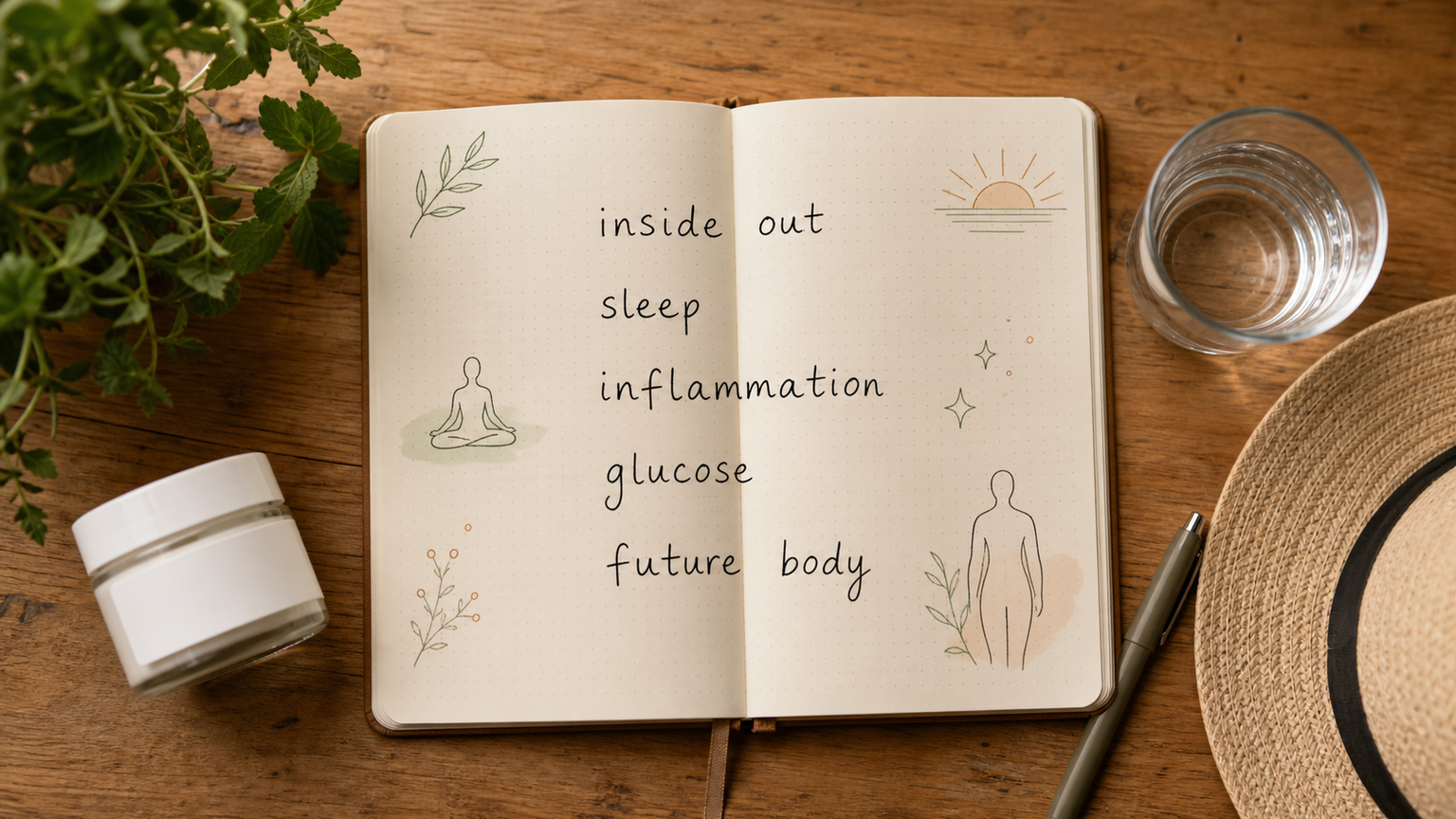
That is the Body category at its best for me. Not biohacking for aesthetics and not fear of age. More like physical capital: what am I building now so that future me has more freedom, capacity and ease?
What Actually Drives Aging
The episode does not reduce ageing to one villain. Guénolé Addor keeps returning to the balance between useful challenge and the body’s ability to adapt and recover. These were the ideas I most wanted to bring home from the full conversation.
Circadian rhythm. His point that a good night’s sleep begins in the morning stayed with me. Morning daylight helps set the body clock, while fairly regular sleep and waking times and less blue light and technology at night support the quality and regularity of sleep. It adds a practical layer to what Matthew Walker explains in Why We Sleep: sleep is not only about counting hours.
Metabolic health and real food. His broad food advice is not a rigid label. It is to reduce ultra-processed food and rebuild metabolic health. He describes feeling better on low-carb food, with steadier energy, digestion and mood, but also finding through his blood results that a period of strict keto had become another stressor for his own body. That nuance matters to me. The ideas I took from Glucose Revolution still help me think about blood sugar, but the goal is not to win a dietary purity competition.
Strength, movement and recovery. Guénolé Addor names strength training as essential as we get older. At the same time, he warns that exercise, cold, sauna, fasting and other hormetic practices do not remain beneficial simply because each one can be useful alone. A small stress needs adaptation and recovery afterwards. Stack too many stressors, or turn sport into constant performance, and the healthy practice can start consuming the very energy it was meant to create.
The microbiome. He also talks about supporting it with sleep, exercise, a varied natural diet and fermented foods such as vegetables, kefir or kombucha where they suit the person. He is careful not to pretend that every plant or every protocol is right for everybody. Tolerance depends partly on the individual microbiome, and variety over time may be more realistic than forcing the same perfect menu every day.
There is plenty more in the episode: red and near-infrared light, water filtration, supplements, biomarkers and some more experimental technology. I understand why I marked this conversation as a goldmine. But the important distinction is that those tools sit after the foundations, not instead of them. Even when Guénolé Addor describes something he uses himself, he is often explicit about uncertainty, dose, evidence and the need to check whether it is doing anything useful for that particular person.
The Notes from Soph Version
What I like about Guénolé Addor’s angle is that it makes anti-aging practical without pretending that one perfect routine exists. I am not particularly interested in looking younger for the sake of it. I am more interested in ageing well, feeling good and having enough physical and mental energy for the life I want to live.
My own move from strict keto to low-carb makes his experience especially interesting. Keto brought me real relief: less inflammation, steadier energy and fewer symptoms shouting for attention. I do not want to dismiss that because another person’s blood tests told a different story. What I do want to remember is that a helpful approach can still need adjusting. The body is not disloyal when it asks for a change.
The lifestyle factors he returns to, strength, natural food, metabolic health, regular sleep, morning light, movement and recovery, are not a cosmetic protocol. They are a way of giving the body better conditions in which to work. The advanced tools may be interesting, but they do not let me skip the basics.
I also like the way this reframes ageing as a relationship rather than a battle. I do not want to fight my age. I want to cooperate with the body that has to carry me through the next decades. Part of that cooperation is learning when a useful stress is building resilience and when I am simply asking too much of myself.
It also removes some of the moral noise around looking after myself. Supporting the body is not punishment and it is not vanity. It is respect for the amazing bodies and minds we have. The version of me in twenty years will inherit the consequences of what I normalise now, and I want those consequences to feel like care rather than neglect.
None of that is glamorous. But it is powerful because it is cumulative. The future body is being negotiated in very ordinary choices now, and I find that motivating without making it moral.
That is the most reassuring part: ageing well is not a secret hack. It is a series of boring, generous basics repeated often enough for the body to trust them.
A quick health disclaimer before the practical bits: I am not a doctor, and this is not medical advice. These are my podcast notes and personal reflections. Please speak to a qualified health professional before changing medication, supplements, diet or treatment, especially if you have a diagnosis, symptoms or children involved.
Practical Takeaways
- Keep strength training in the plan. Guénolé Addor names it as one of the most important forms of exercise as we get older, not for appearance but for health, capacity and independence.
- Prepare for sleep in the morning. Get daylight after waking where possible, aim for regular sleep and waking times and reduce blue light and technology at night. Quality and rhythm matter as well as quantity.
- Start food changes with less ultra-processed food rather than a perfect label. Low-carb or keto may help some people, but training, blood results, symptoms and total stress all belong in the decision.
- Do not stack every healthy stress at once. Exercise, fasting, cold and heat all need recovery. More is not automatically better, and a longevity routine should not take over the life it is supposed to support.
- Support the microbiome with the basics: sleep, movement, varied natural food and fermented foods if they suit you. Test and personalise before chasing advanced supplements or technology.
Why This Belongs in Body
Body is where I explore learning to live inside my physical self with more intelligence – not to shrink it or perform with it, but to understand it well enough to support it properly. Dr Addor belongs here because he clarifies the mechanisms behind something I already feel: that the lifestyle choices I make now are decisions I am making for the person I want to be at fifty, sixty, seventy, eighty and beyond!
I do not want to be afraid of ageing. I want to be informed about it and to age well. Living a long and healthy life is a privilege, and the choices I make now can help support it. There is a significant difference.
Notes from Soph | Learning, not perfection.
Et toi? What is one thing you have changed in recent years that you think of as a long-term investment in your body? Come and share it in the Notes from Soph community on Skool.
Source Details
Limitless Project – “L’expert n°1 de l’anti-aging – Dr Guénolé Addor” David Nicolas feat. Dr. Guénolé Addor | 31 May 2026
🎙 Listen to the episode on Apple Podcasts or search “Limitless Project Dr Guénolé Addor” on Spotify

